
KOHOLĀ · MAUI
The Lives of Maui's Humpbacks
Above, below and at the surface — what Maui's whales are doing every winter, and how you can help protect them.
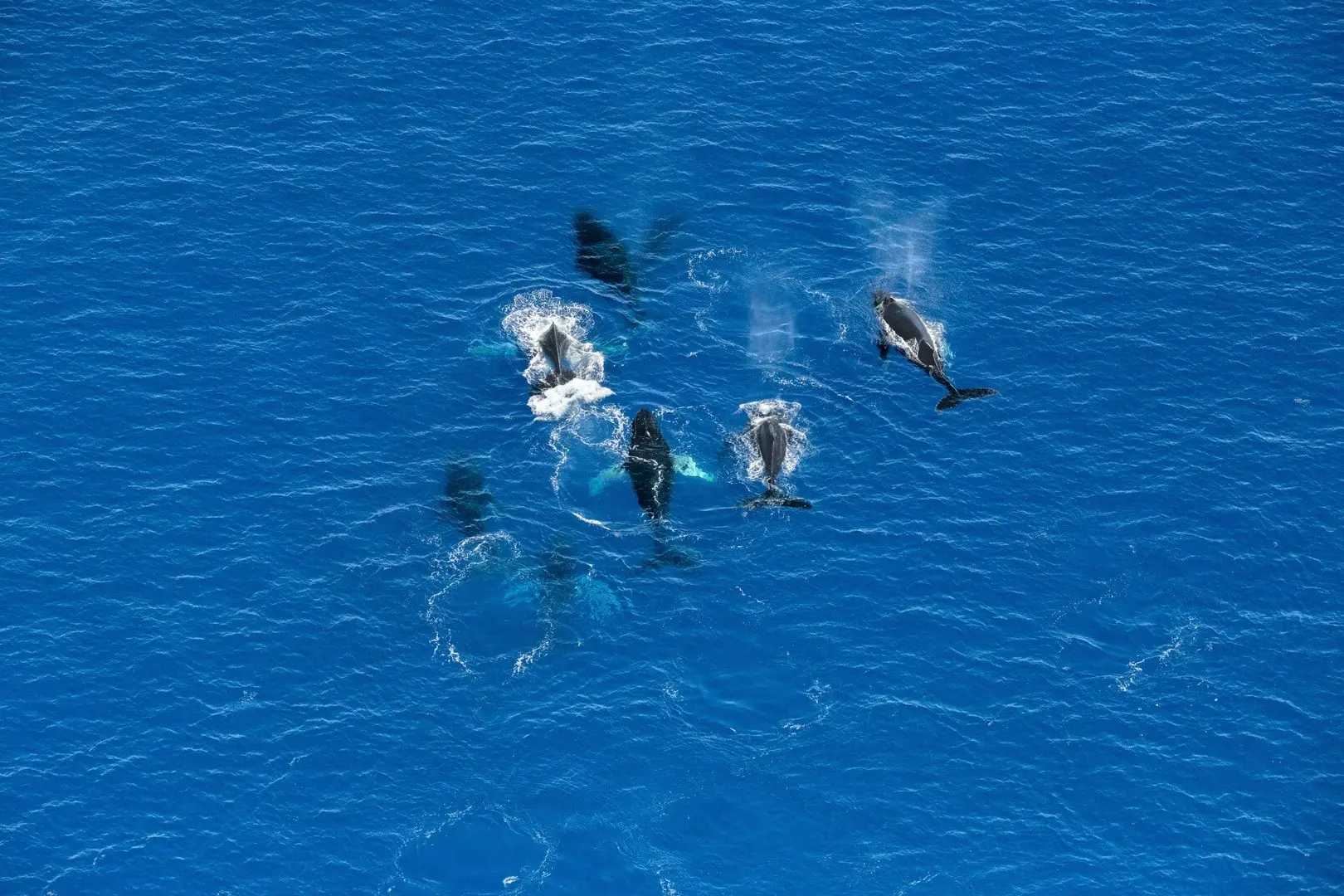
Mother, calf, and escort · Below
Why Maui's humpbacks matter
People care about Maui's humpbacks for several reasons at once. Some are practical, some are emotional, and some are cultural.
They come here to have their babies.
Each winter, North Pacific humpbacks swim about 3,000 miles from feeding grounds in Alaska to Hawaiʻi. It's one of the longest migrations of any mammal. They don't come to eat. They come to give birth, nurse their calves, and mate. The mothers fast for months while feeding their newborns. When people learn that a whale they're watching hasn't eaten since leaving Alaska and is pouring everything into her calf, they tend to feel it right away.
You can actually see them.
The water between Maui, Lānaʻi, Molokaʻi and Kahoʻolawe is shallow, warm and sheltered, and it's one of the densest humpback gathering spots in the world. You don't need a boat or binoculars. People watch breaches, tail slaps and mothers surfacing with calves from the beach, from a lānai, or from the side of the road. That kind of access is rare with a 40-ton wild animal.
You can hear them.
The males sing long, complex songs that slowly change over the season. If you put your head underwater while snorkeling in winter, you can often hear them, and many people say it's the moment that gets them.
It's a comeback story.
Whaling pushed humpbacks close to extinction. After protections began in the 1960s and the Hawaiian Islands Humpback Whale National Marine Sanctuary was created, the population recovered well enough that the Hawaiʻi population was taken off the endangered list in 2016. People love a story of hope that actually happened.
They matter in Hawaiian culture.
The humpback is koholā. For some Hawaiian families whales are ʻaumākua, ancestral guardians, and they're tied to Kanaloa, the god of the ocean. Their return each year marks the season, so the connection goes well beyond tourism.
They show how the ocean is doing.
In recent years researchers and locals have reported fewer whales in some seasons, and the leading explanation is ocean warming that disrupted their food supply up north. Because the whales link Alaska and Hawaiʻi, they make the ocean's health feel personal. When fewer come back, people notice.
The feeling is hard to put into words.
Most people describe it in emotional terms: an animal that huge moving gently, a mother keeping her baby close, a whale that seems to look right back at you. It makes people feel small in a good way.
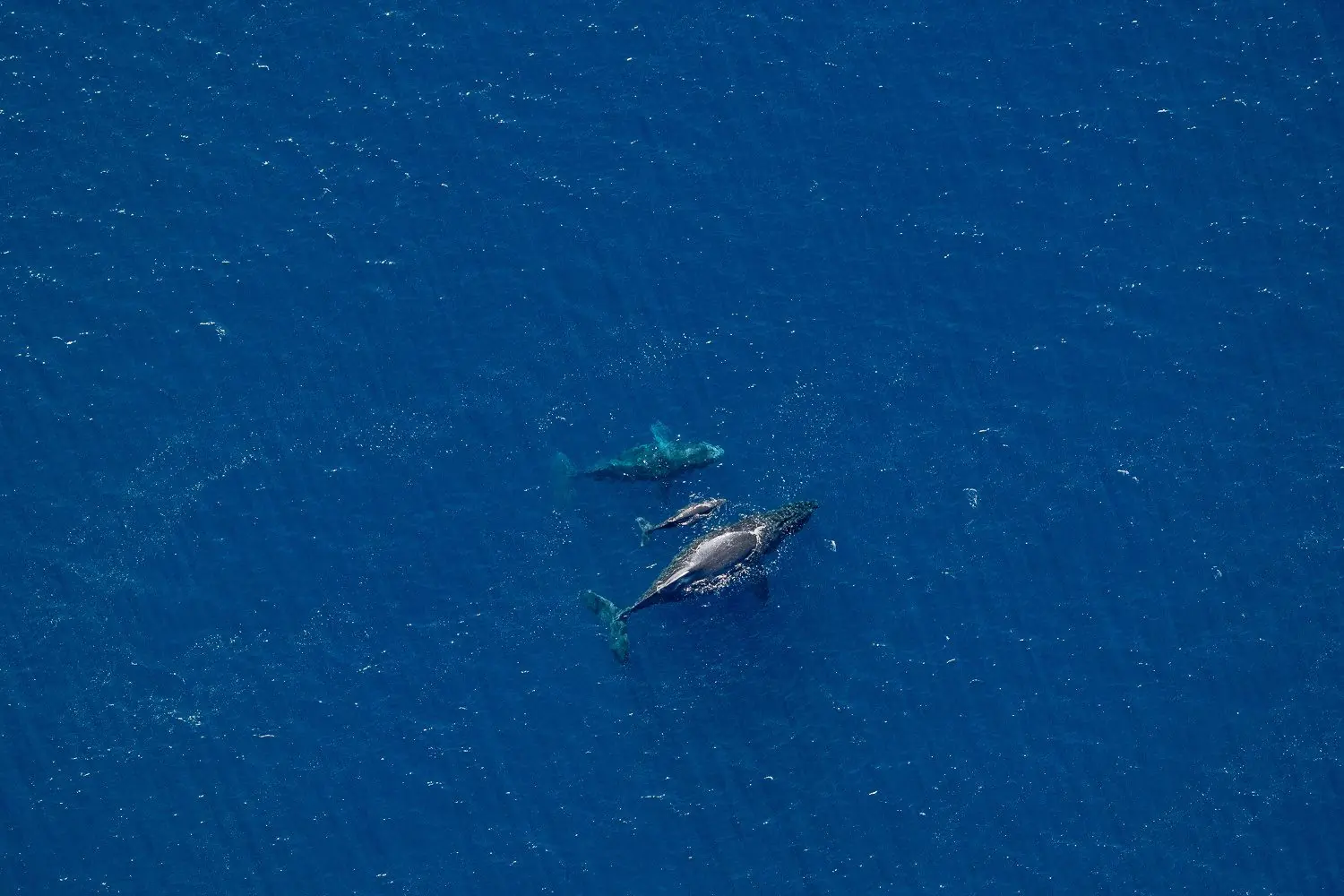
Why do humpback whales come to Maui?
Every winter, thousands of humpback whales swim about 3,000 miles from Alaska to Hawaiʻi. They come here to mate, give birth and nurse their calves in warm, shallow, protected water. More than 10,000 humpbacks winter in Hawaiian waters each year, and the channel between Maui, Lānaʻi and Molokaʻi is one of their favorite places.
They don't come here to eat. Hawaiʻi's warm water doesn't hold enough food, so most whales barely feed at all until they return to Alaska in spring.
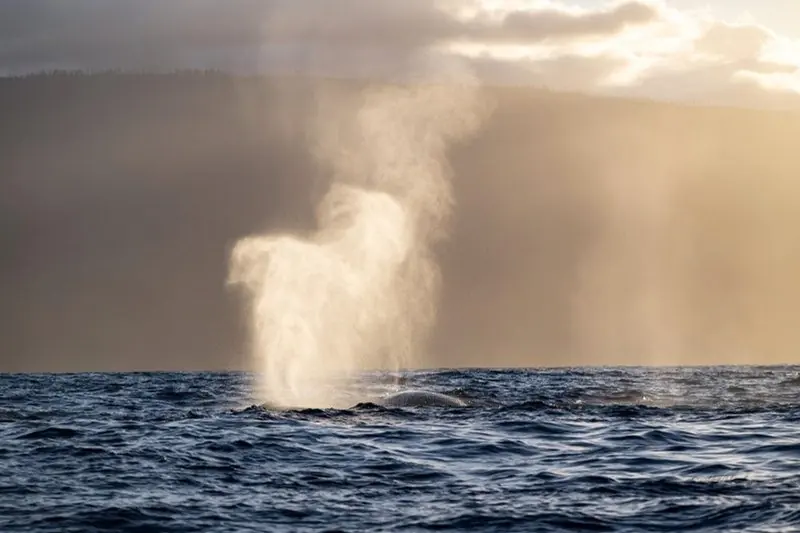
When are humpback whales in Maui?
The first whales usually arrive in October or November. Most are here from December through April, and the busiest months are January through March. By May, most have started the long swim north.
Quick guide:
- November: first arrivals
- December: numbers building, first calves
- January–March: peak season — the most whales, the most action
- April: mothers and calves, the last to leave

Above the surface: what you'll see
Breaching: a whale launching most of its 40-ton body out of the water and crashing back down. Scientists think it can be a signal, a way to communicate across distance, or sometimes just play.
Tail slaps and fin slaps: a whale smacking its tail or long side fin on the water, again and again. The sound carries far.
The blow: a whale's breath, a misty spout you can see from shore long before you see the whale.
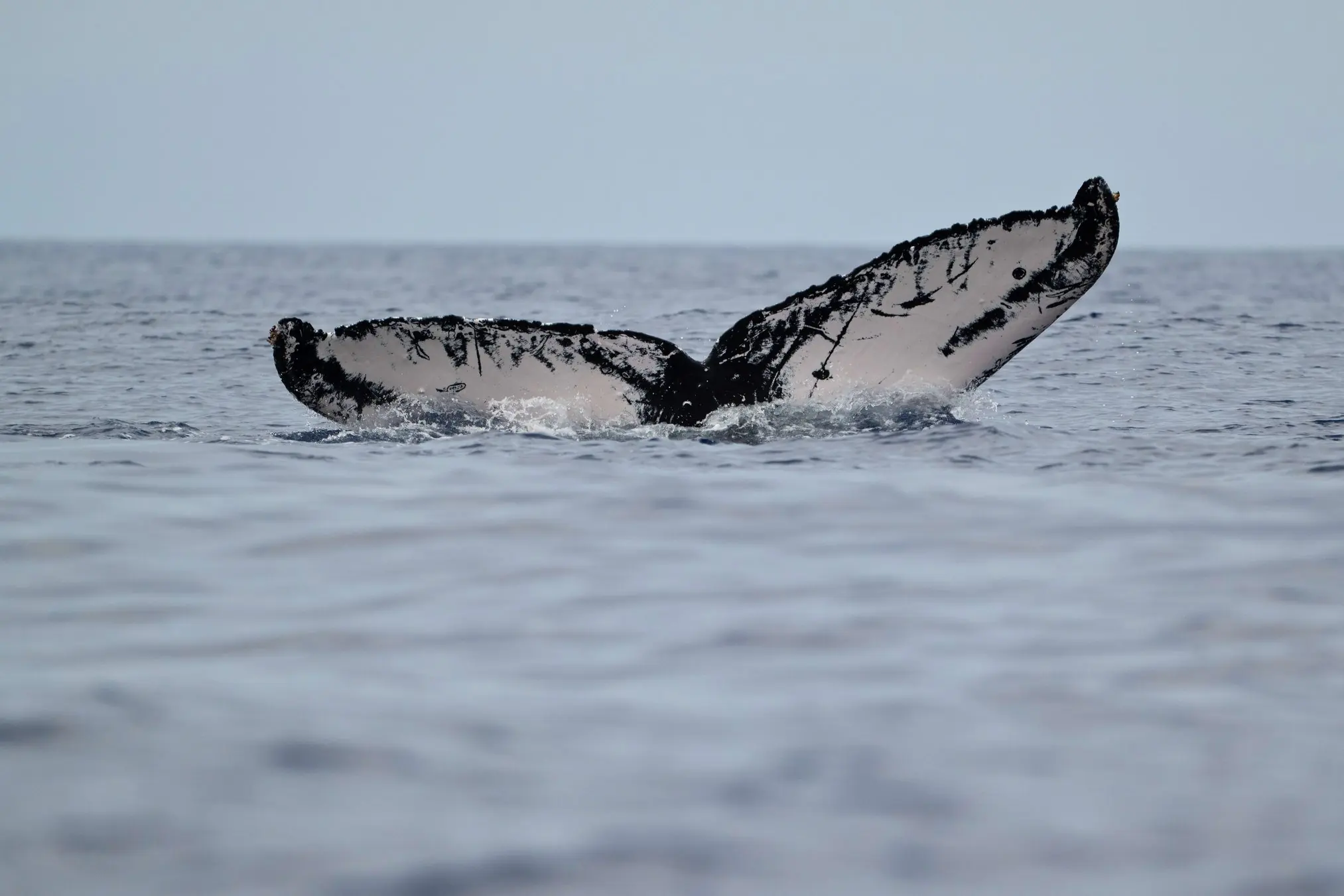
The fluke: when a whale tips its tail up to dive. The pattern on the underside of every tail is different, like a fingerprint.
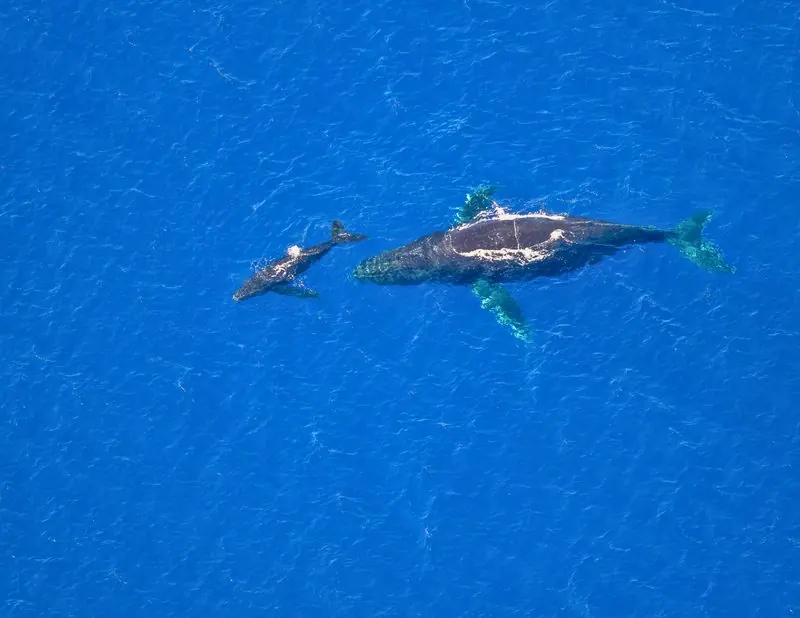
At the surface: mothers and calves
Hawaiʻi is the only place in the United States where humpback whales mate, give birth and nurse their young. A newborn calf is about 13 to 16 feet long and drinks its mother's rich milk for months, growing fast for the trip north.
Calves need to breathe more often than adults, so they spend a lot of time near the surface. That makes this the most magical thing to see — and the most fragile. Calves are hard to spot and are the most at risk from boats.

Below the surface: the song
Male humpbacks sing long, complex songs that can last 20 minutes and repeat for hours. All the males in an area share the same song, and it slowly changes over the season. If you put your head underwater off Maui in winter, you can often hear it.
Below the surface you'll also find "competition pods": groups of males chasing one female, pushing and racing for the spot beside her.
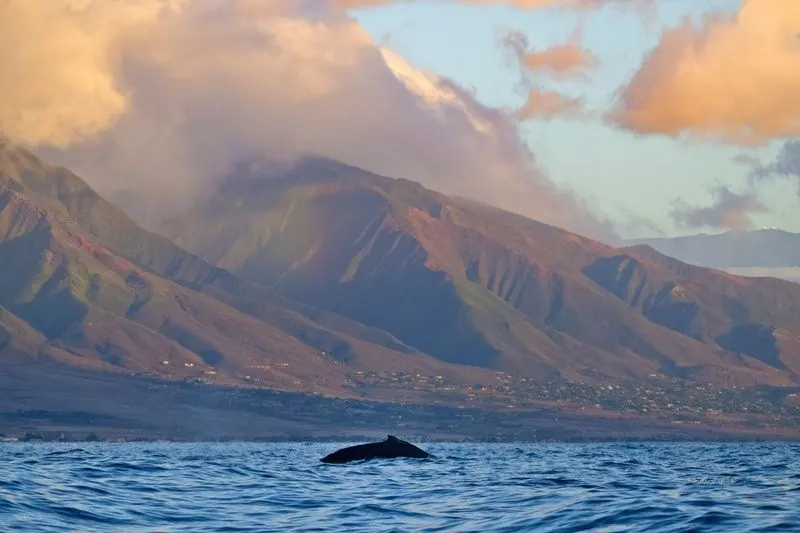
Where can you see whales in Maui?
From shore: any high spot along West Maui and South Maui looking out over the water — from Lahaina and Kāʻanapali to Kīhei and Wailea. Look for the blow first, then watch the same spot.
From the water: the ʻAuʻau Channel off Lahaina is one of the best whale areas in the world. Choose an operator that keeps its distance and turns the engine off around whales.
Tip: early morning, with calm water and low wind, makes blows and splashes easiest to spot.
How to watch whales respectfully
In Hawaiʻi, it's illegal to approach a humpback whale closer than 100 yards by any means — boat, kayak, paddleboard, swimming or drone — or closer than 1,000 feet by aircraft.
- Slow down in whale waters, especially around mothers and calves.
- Never approach head-on or cut in front of a whale's path.
- If a whale comes close to you, stop and let it move on.
Protecting Maui's humpbacks
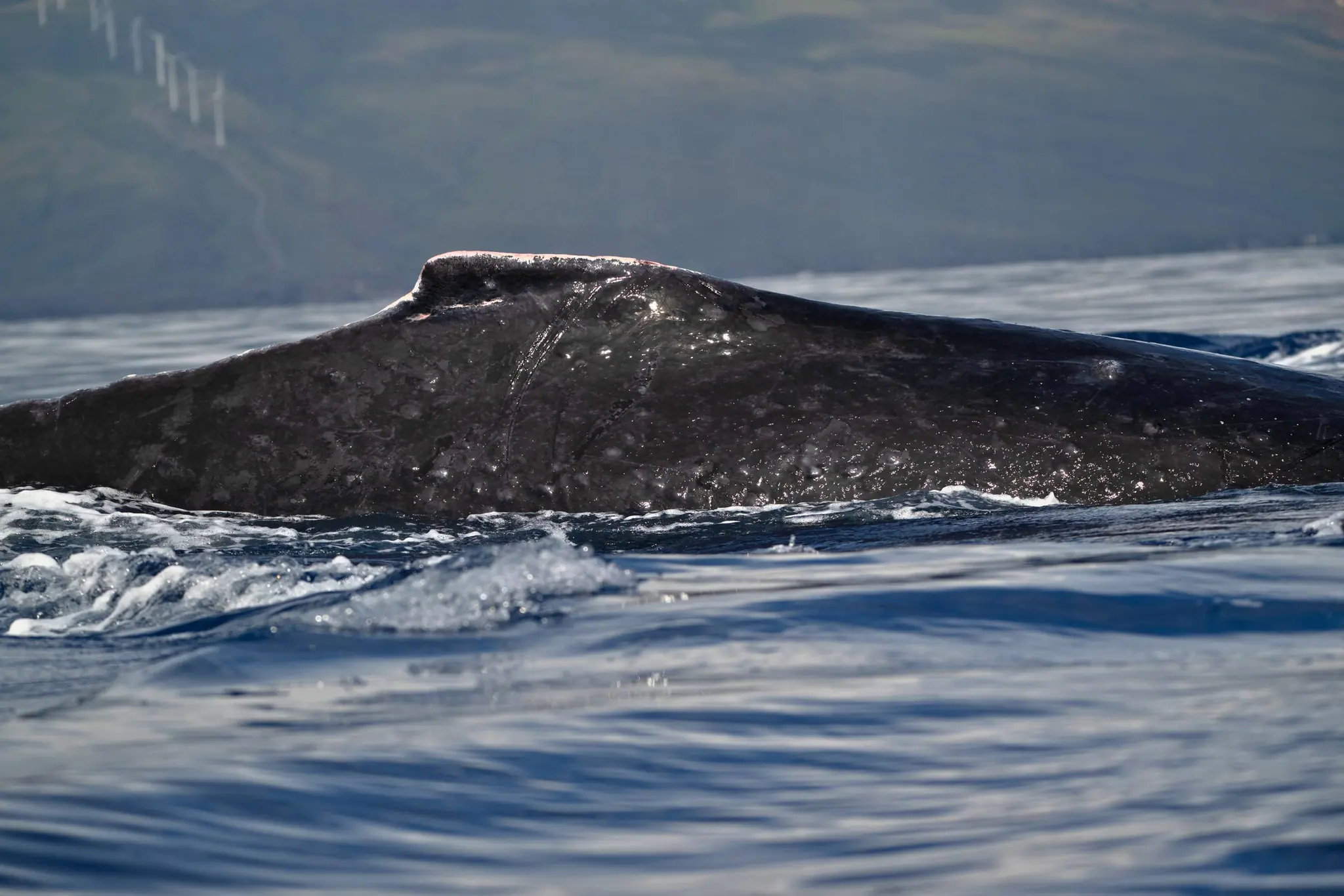
Humpbacks were hunted nearly to extinction. Today their numbers have recovered, but they still face real dangers here: getting tangled in fishing line and ropes, which can cause starvation, injury and infection, and being hit by boats — calves most of all.
The Hawaiian Islands Humpback Whale National Marine Sanctuary protects their winter home in the waters around Maui Nui.
See a whale in trouble? Keep your distance and call the NOAA Marine Wildlife Hotline: 1-888-256-9840 (or the U.S. Coast Guard on VHF channel 16).
How this project helps
Every photograph helps. Each whale's tail is unique, so fluke photos are shared with Happywhale, a global whale-ID platform, so researchers can follow individual whales between Maui and Alaska. Scars and entanglement marks are photographed and documented too.
The rest goes to learning: free Talk Story sessions, stories and images for Maui's schools and visitors, and this guide. 100% of profits go back to Maui's whales and ocean.
Follow the whales this season
Get Surface free — the season as it happens, straight from the water.